What Mississippi law says
Casinos and retail sports betting, no online casino; sweepstakes operate without a ban.
Online casino is not licensed in Mississippi. Sports betting is limited. The relevant regulator is Mississippi Gaming Commission.
Which operators accept Mississippi
Of the 20 documented brands, the following list Mississippi as available:
- Stake.us, state list read 2026-07-10
- McLuck, state list read 2026-11-02
- Jackpota, state list read 2026-11-04
- High 5 Casino, state list read 2026-11-04
- Funrize, state list read 2026-11-04
- Hello Millions, state list read 2026-11-04
- Mega Bonanza, state list read 2026-11-04
- Fortune Wins, state list read 2026-11-04
- Zula Casino, state list read 2026-11-04
- Sportzino, state list read 2026-11-04
- Legendz Casino, state list read 2026-11-04
- SpinBlitz, state list read 2026-11-04
- Fortune Coins, state list read 2026-11-04
- Crown Coins, state list read 2026-11-04
- Pulsz, state list read 2026-11-04
- LoneStar, state list read 2026-11-04
- Real Prize, state list read 2026-11-04
Availability is an operator decision, not a state one. A brand can accept Mississippi today and exclude it next month, which is why the list is checked on the day you sign up rather than the day you redeem.
Who regulates gambling in Mississippi
The Mississippi Gaming Commission regulates the state's casinos, and it supervises one of the larger casino industries in the country in a state of three million people. It licenses the properties, approves the games, enforces the rules and works with the Department of Revenue, which collects the gaming tax. The commission's remit is retail: it licenses casinos on the Gulf Coast and in Tunica County, and it has no online casino licence to issue.
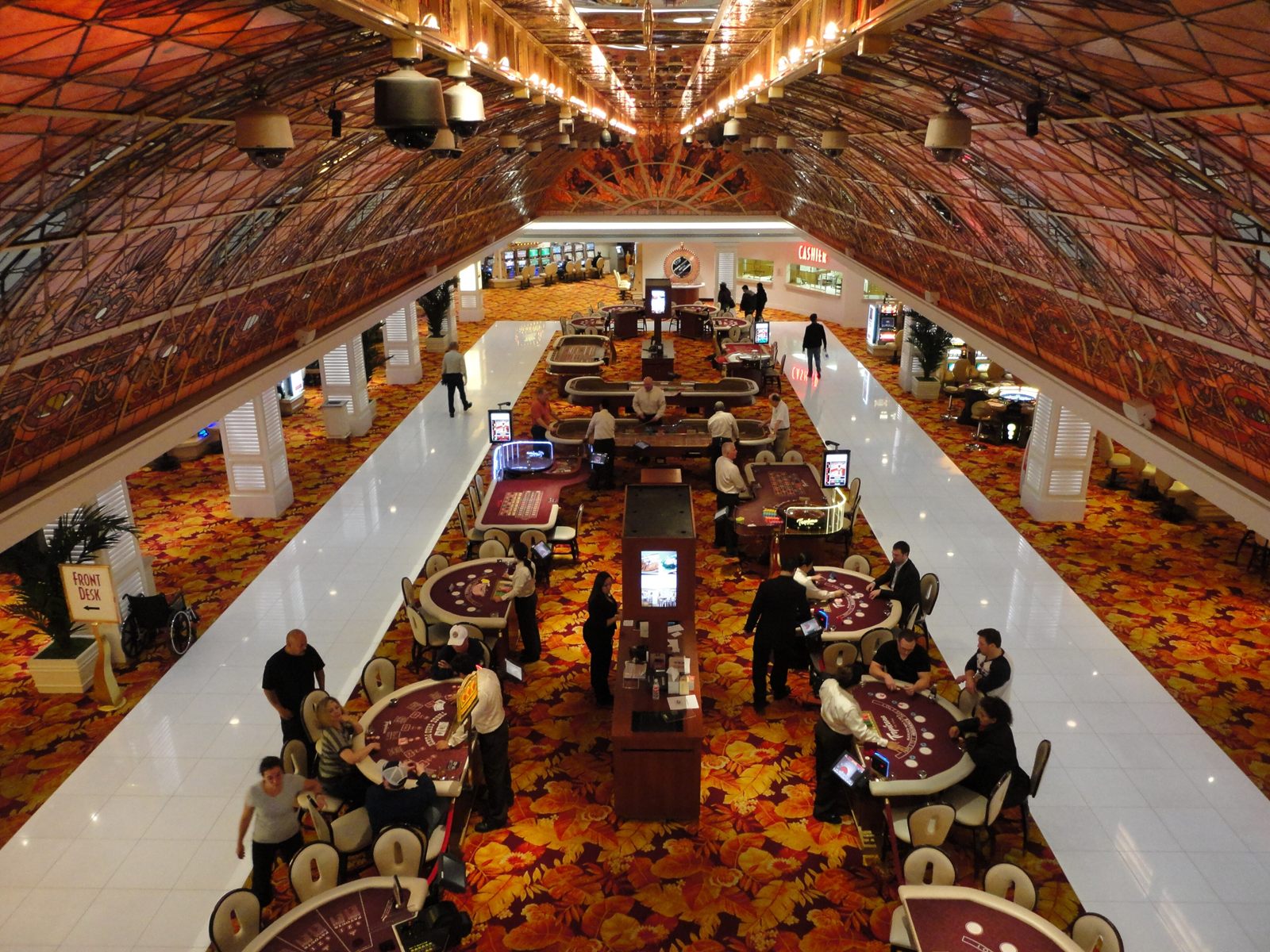
The geographic structure is the thing a reader has to understand. Mississippi's casinos are concentrated in two areas: the Gulf Coast, where Biloxi, Gulfport and Bay St. Louis form a strip of properties, and Tunica County in the north-west, which sits within an hour of Memphis. Between them they hold most of the state's casino licences, and the two markets have different customers and different economics.
The waterfront requirement is the other structural fact. Mississippi casinos were required to be on water, which is why the original properties were dockside barges, and the rule was relaxed after Hurricane Katrina so that casinos could move inland within a defined distance of the shoreline. That is why a reader who visits a Mississippi casino today may find a land-based building where a barge used to be.
Sports betting is legal but limited. The state authorised sports wagering in 2018 after the federal prohibition fell, and the books are inside licensed casinos and their retail sports bars. There is no mobile sportsbook in Mississippi, because the legislature has not authorised one, which makes the state one of the few with legal retail sports betting and no phone-based product.
The Mississippi Lottery is a recent addition. It was created by statute in 2018 and began selling tickets in 2019, with proceeds going to roads and bridges. It is a retail product with its own commission, and it has no online casino licence attached, which is why a reader cannot point to the lottery as an example of the state tolerating online casino play.
A dual-currency sweepstakes product fits none of those categories. It is not a casino game on a licensed property, not a retail sports bet and not a lottery ticket. The commission has no application for it, and its remit is the licensed premises rather than a website run by a company it has never seen.
The Attorney General is the enforcement channel for the gambling statutes and for consumer protection. Mississippi's office has pursued unlicensed gambling and deceptive practices, and a brand that misstates its licence or its redemption terms is exposed there. That is a different route from the commission's licensing remit, and it is the one that would matter if the state ever acted.
For a reader the practical map is clear. The casinos are listed and supervised, the sportsbooks are inside them, the lottery has its own commission and the promotional product is none of those. The state's open tier is a description of what has not been addressed rather than of a decision to allow it.
The comparison with Louisiana is the nearest one. Louisiana licenses casinos and sports betting, has no online casino and banned the promotional product in 2026. Mississippi has a similar market and no ban, which makes the two states a natural pair for a reader who wants to see how much a single session can change.
The comparison with Alabama runs the other way. Alabama has no casinos and no lottery, and the promotional product is the only casino-style option; Mississippi has both and the product is still available. Openness there is not a function of the licensed market's size.
The commission's structure is worth a paragraph because it explains how a large retail market can exist without an online one. It has five members appointed by the governor, an executive director who runs the staff, and an enforcement division with investigators who work the Coast and Tunica. Those investigators are the state's presence at a property, and their existence is why a licensed casino in Mississippi feels supervised in a way a website does not.
The gaming tax is the reason the state has kept the market large and retail. Mississippi taxes gross gaming revenue at a rate that is high by national standards, and it directs a share to the counties and cities that host the properties. That revenue is a budget line in Biloxi and Tunica, which is why local officials are as protective of the industry as the operators are.
The licensed-premises concept is the legal core of the market. A Mississippi casino licence attaches to a specific location, and the commission's authority runs to that location and the people who work there. A website has no location, which is why the commission's remit cannot reach a promotional operator without a statute that gives it a different kind of authority.
Market history: Biloxi, Tunica and a retail-only sportsbook
Mississippi legalised casino gambling in 1990, and the industry that followed was built on the water. Biloxi's dockside barges opened in 1992, Tunica followed in the same years, and within a decade Mississippi had one of the largest casino industries in the country outside Nevada and New Jersey. The two markets served different customers: the Gulf Coast drew from New Orleans, Mobile and the Florida panhandle, and Tunica drew from Memphis and the mid-South.
The waterfront rule shaped the architecture. Casinos were required to be on navigable water, which produced the barge hotels that became the region's signature, and the rule was relaxed after Katrina so that properties could rebuild inland within a set distance. The change preserved the industry after the storm and effectively converted a dockside market into a land-based one.
The Gulf Coast's recovery after 2005 is the industry's defining story. The storm destroyed most of the properties, the legislature moved the waterfront line, and the casinos rebuilt as hotels and resorts rather than barges. That reconstruction is why Biloxi today looks like a resort strip rather than a row of docks.
Sports betting arrived in 2018 with a retail-only design. The legislature authorised wagering at the casinos, the commission wrote the rules, and the books opened inside existing properties. The state has repeatedly declined to authorise mobile betting, usually on the argument that the casinos want the foot traffic and the legislature is not convinced by the revenue case.
The lottery came the same year and was framed as an infrastructure measure. The 2018 statute created a lottery corporation, the first tickets were sold in 2019, and the proceeds were dedicated to roads and bridges. It was the state's first new gambling product in decades and it passed without the fight a casino bill would have provoked.
The iGaming debate has been quieter than in neighbouring states. Bills have been filed, the casinos have been divided, and none has passed. Mississippi has therefore spent the 2020s with a large retail casino market, a retail sportsbook, a lottery and no online casino, which is the gap the promotional brands fill.
The sweepstakes brands arrived in that gap and stayed. Both audited operators list Mississippi, and the state has neither licensed nor prosecuted them. The market is quiet because the licensed alternatives are physical, which is exactly the condition in which a promotional product finds an audience.
The 1990 campaign is worth remembering because it was a local economic argument. Biloxi and Tunica were poor counties with a tourism base and a declining fishing industry, and the casino bill was sold as a way to create jobs. It passed narrowly, the first properties opened within two years, and the industry grew faster than its advocates promised.
Tunica's rise and partial decline is the cautionary part of the story. The county became one of the largest casino markets in the country in the 1990s, with a strip of properties serving Memphis, and then the market contracted as competition arrived in neighbouring states and as the properties consolidated. A reader who visits today sees a smaller district than the one the 1990s described.
The Katrina rebuild is the Gulf Coast's version of that story in reverse. The storm destroyed the industry, the legislature moved the waterfront line, and the properties rebuilt as resorts with hotels and conference space. The Coast's market today is more resilient than the barge model was, and the reconstruction is the clearest example in the country of a state changing a gambling rule to save an industry.
Three player profiles in Mississippi
The Gulf Coast reader is the most common profile and the one best served by the retail market. They live near Biloxi or Gulfport, they know the properties, and they have watched the strip rebuild itself after the storm. For them the promotional product is a website with no hotel behind it, and the licensed market is close enough that the comparison is immediate.
The Tunica reader is the northern profile, and their market is different. Tunica County is a rural area with a cluster of casinos that serve Memphis, and a reader who lives there has a property within twenty minutes and no sportsbook on their phone. The promotional product's appeal is strongest among the readers who want a product the retail market does not offer.
The Memphis reader is the cross-border variant. They live in Tennessee, where sports betting is legal online and casinos are not, and they drive to Tunica for a casino floor. A promotional casino is available to them at home, which makes the Mississippi product a convenience rather than a necessity.
The sports bettor is the fourth profile and the one with the clearest grievance. They have a legal sportsbook at a casino and no way to bet from home, and neighbouring states have mobile markets. That gap is why the promotional product has an audience even in a state with a large casino industry.
All three profiles end in the same place. Mississippi has a large retail market, a retail sportsbook, a lottery and no online casino. The reader who wants casino-style play at home has the promotional product or a drive, and the state has not decided which is the answer.
What separates the profiles is how much the retail market serves them. The Gulf Coast reader has a resort strip; the Tunica reader has a cluster; the Memphis reader has a border. The reader who has moved their budget online is the one with no licensed alternative at all.
The Jackson reader is the central profile and the one furthest from a casino. The state capital is two hours from the Coast and three from Tunica, and a reader there has no property within a comfortable drive. That is the reader the promotional product serves best, and the one with the fewest licensed options if it goes away.
The casino worker is the other profile worth naming. Mississippi's properties employ tens of thousands of people, and their view of a promotional brand is informed by knowing what the commission's investigators do. That perspective is the most concrete argument for the licensed market in a state where the licensed market is the local economy.
Taxes, records and what to check in Mississippi
Mississippi taxes individual income at a flat rate that the legislature has been reducing, currently around 4.7 per cent, and it taxes gambling winnings as income. A casino or sportsbook win is reportable at both state and federal level, and the flat rate makes the state calculation one line rather than a schedule.
The federal paperwork depends on the payment. A gambling win generates a W-2G above the reporting thresholds, and a promotional prize that is not gambling generates a 1099-MISC. In Mississippi the licensed operators issue the forms as a condition of their licence, which is a stronger obligation than the federal one alone.
In Mississippi the licensed casinos are regulated and the promotional brands are not, so the two records are different in kind. The promotional one is whatever the reader saved: the request, the reply and the terms date, kept off the platform. That asymmetry is the practical reason this market rewards a folder and punishes a memory.
Before buying anything, confirm five numbers in writing: the redemption minimum, the processing window, any fee, the verification requirements and the state line. In Mississippi the state line is permissive and the regulator is quiet, which is the combination in which a written answer matters most.
The Mississippi-specific checks are about the licence. The commission publishes the casinos it licenses, the lottery publishes its retailers and the state publishes the gaming tax revenue, and a brand that is not connected to any of those is not licensed in the state. The casino age floor is 21, and a promotional site may set 18 or 21 depending on its terms.
A dispute with a licensed casino goes to the commission, which has a complaints process and can act against a licence. A dispute with a promotional brand has no equivalent, and the state's open tier does not create one, it only means the brand has not been told to leave.
The tax summary is unglamorous. A win is income at a flat rate, the form depends on how the operator characterises the payment, and the player keeps the record. Mississippi's system is simpler than most, and the discipline is the same as everywhere.
One further note on records in Mississippi: keep the property's name and the date if you played at a casino, because the gaming tax and the licence are tied to a specific location. A sportsbook ticket at a Biloxi property and a promotional redemption at home are different transactions with different evidence.
Mississippi's Gulf Coast and river casinos handle withholding at the cage, and the form is issued there. A reader who is paid by a promotional brand instead will receive whatever that brand's terms describe, which is usually nothing until a much higher threshold.
The self-exclusion programme is the licensed market's concrete benefit and the promotional market's clearest gap. Mississippi requires its casinos to maintain a list and to honour a request, and a reader who has asked to be excluded is barred from the properties. Nothing in the state's framework reaches a website, which is why a reader who relies on exclusion should not treat a promotional account as covered.
Mississippi's promotional terms follow the same template, and the notice requirement is the one that ends most complaints before they start. A reader who emails a specific question and keeps the reply has already satisfied the part of the clause that others miss. It is a small habit and it is the difference between a complaint that is heard and one that is refused on procedure.
The short version for Mississippi
Mississippi licenses casinos on the Gulf Coast and in Tunica County, allows retail sports betting at those casinos, runs a state lottery and does not license online casino gaming. Both audited brands list the state as available.
The openness is an absence rather than a decision. The state has a large retail market and no online product, which is the gap a promotional casino fills. No Mississippi regulator has approved it and none has rejected it, which is why the brand list is the only evidence.
What would change the page is a mobile sports betting bill, an iGaming bill or an Attorney General action. The first two would give the state an online product and a regulator with a reason to look at the promotional market; the third would close it without a bill.
For a reader the answer is: use the retail market if you want a licensed product, check the brand's state line if you use a promotional one, confirm the five numbers in writing and keep your own record.
The comparison with Louisiana is the one to remember. Two states with similar casino markets and the same gap, and only one of them has closed it. That difference is a single legislative session, and it is the reason the state list changes faster than the law does.
The comparison with Arkansas is the other regional one. Arkansas has four casinos under a constitutional amendment and a licensed sportsbook with mobile apps, and it is open in our model. Mississippi has more casinos and no mobile sportsbook, which is a reminder that the number of properties and the online product are separate questions.
What we would update first is a mobile sports betting bill. Mississippi has debated one for years, and its passage would give the state its first online gambling product and a regulator with a reason to look at what else is operating online. A sweepstakes question would then have a comparator rather than a vacuum.
The state's tourism economy is part of why the retail model has survived. The Coast's casinos sell rooms, restaurants and entertainment as much as they sell gaming, and the commission licenses a resort industry rather than a row of slot parlours. That makes the retail product harder to replace with a website, which is why the promotional market has grown alongside it rather than instead of it.
The lottery's dedicated fund is worth a note because it explains a political choice. Mississippi's lottery proceeds go to infrastructure, which gave the product a purpose that a casino bill could not claim. It is the same technique other states used for scholarships or water projects: attach the money to something visible and the gambling vote becomes easier.
The charitable gambling channel is small in Mississippi compared with Minnesota's, but it exists. Bingo and raffles for non-profit organisations run under local permits, and the sums are modest. It is another example of a gambling product the state licenses without licensing a casino, and it reinforces the point that the state's framework is a set of specific permissions rather than a general policy.
For a reader who wants to know whether the state is paying attention, the commission's meeting minutes are the source. They record licence conditions, enforcement actions and the occasional discussion of a new product, and a change in the state's posture would appear there before it appeared in a state list.
The last thing to say about Mississippi is that its open tier is a product of geography as much as politics. The casinos are on the Coast and in Tunica because those were the places with water and a market, and the online product has no equivalent geography. That is why the state has a large industry and no online casino, and why the promotional market fills a space the industry cannot.
The commission's licensing standards are the public part of the framework, and they are detailed. An applicant has to show the source of its funds, the suitability of its principals and a business plan that the staff can audit, and the commission can condition a licence on specific commitments. A promotional operator has none of that review, which is the concrete meaning of unlicensed.
A reader who compares the two markets should compare the complaint routes rather than the bonuses. A Mississippi casino dispute goes to the commission, which can act against a licence; a promotional dispute goes to a support queue. That difference is worth more than the size of a welcome offer, and it is the comparison this site exists to make.
The state's gaming tax revenue is published annually, and it is the easiest way to see how much the licensed market matters. The figures show a market that peaked, contracted and stabilised, and a tax line that local governments depend on. A reader who wants to understand why the state has not expanded online is looking at that line.
The last thing to say about Mississippi is that the two casino regions have different customers and different futures. The Coast is a resort market with hotels and entertainment, and Tunica is a regional market within an hour of Memphis. The first is more resilient and the second is more exposed to a change in a neighbouring state's rules, which is why the commission watches both.
For a reader the practical answer is to check the state list rather than the tier. Mississippi is open, both audited brands accept it, and the licensed market is retail. The list is the only thing that can change without a notice, and it is the first thing to look at before a deposit.
Taxes and records in Mississippi
There is no state regulator for this product in Mississippi, so redemption follows the operator's terms: verification, a minimum, a pending period and processing. The state enters at the eligibility check, which is why a brand that accepts the state at sign-up can still refuse a player whose circumstances change.
Mississippi has a state income tax, so a prize may be reportable at state level as well as federally. Keep a record of dates and amounts; this is general information, not tax advice.
How the Mississippi page was built
Built from 17 readable brand files, the Mississippi Gaming Commission's own pages, and the state's published position. The list was checked on the date at the top. We do not have a redemption record from Mississippi, so the page claims no payout speed and no success rate. Terms used here are defined in the glossary.
If a Mississippi term has changed, send the clause and the date to editorial@casinotrustcenter.com; a dated list or a redemption record is what would change the page, not a press release. Read the methodology.
Reviewed by Darnell Simons
Darnell Simons tested casinos and sportsbooks as a player long before he wrote about them, and now covers sweepstakes and social casinos the same way: open an account, read the terms, test a small redemption, and write down what actually happened.