McLuck
Operator geo-block notice lists 17 restricted states, including New York, New Jersey and Michigan.
External site. Check the state list there before signing up.
State list checked
B-Two OperationsNot licensed gambling32 states not excluded17 excluded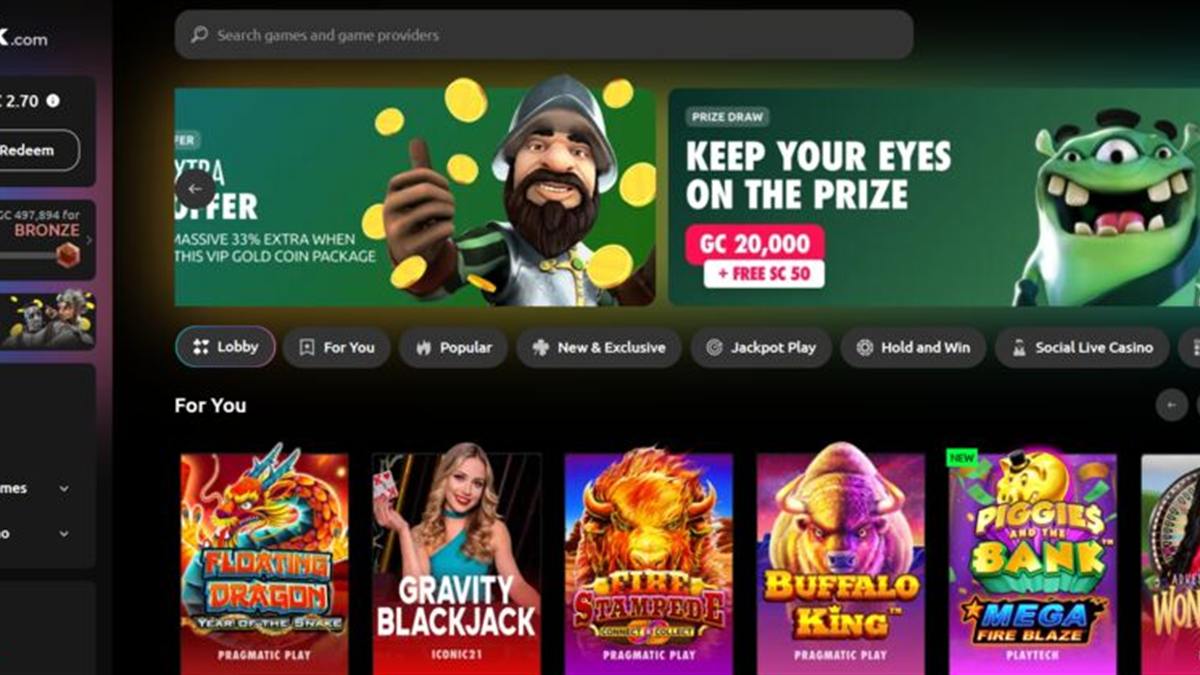
McLuck at a glance
McLuck was audited from the operator's own terms. The welcome offer line comes from the source linked here, not from the terms.
Operator press release: 150% welcome offer (15 Apr 2026)- Welcome offer
- 150% extra on a first coin purchase
- Smallest cash prize
- See the redemption section
- States excluded
- 17 of 51
- Minimum age
- Not published
- Terms version
- Geo-block notice, 2026-10-30
- Offer conditions
- A purchase is required for the 150% element; the free entry route is separate
Gold coins are play money with no cash value; only the sweeps-style coin is redeemable, at the rate this brand states (most are 1 SC = $1, Fortune Coins and Funrize use 100 = $1).
| Term | What we recorded |
|---|---|
| Excluded states | 17 of 51 |
| Operated by | B-Two Operations |
| Model | Dual currency (Gold Coins + Sweeps Coins) |
| Minimum age | Not stated in our notes |
| Terms version | Geo-block notice |
| Terms date | 2026-10-30 |
| Audit depth | State list checked |
Excluded states
Named in the operator’s own terms. Enforced at sign-up.
- WA
- ID
- IN
- NV
- KY
- MT
- MI
- LA
- DE
- NY
- NJ
- WV
- MD
- CT
- TN
- ME
- OK
Closed by state law
Not named in McLuck's operator list, but the state has closed the market. The statute decides, so these are not options even though the list does not exclude them.
- CA
- IL
Open states
Not excluded, subject to change without notice.
- AL
- AK
- AZ
- AR
- CO
- DC
- FL
- GA
- HI
- IA
- KS
- MA
- MN
- MS
- MO
- NE
- NH
- NM
- NC
- ND
- OH
- OR
- PA
- RI
- SC
- SD
- TX
- UT
- VT
- VA
- WI
- WY
Money in, money out
McLuck separates a purchase rail from a prize rail. Wallet payments almost never pay a prize.
This brand's floor, next to every other- Deposits
- Visa
- Mastercard
- Discover
- Apple Pay
- Google Pay
- Prize redemption
- Bank or crypto, named in the operator's restricted-access notice
Wallet purchases are the easy half; the prize rail is the one to ask support about in writing.
What the reviews report
Third-party reviews of McLuck, not the operator's own document. Where they disagree with the audit above, the audit wins. Sources read on 2 November 2026.
Sources
- Sign-up offer
- 120,000 Gold Coins (no cash value) + 60 SC (≈ $60) plus a spin worth up to 500 SC (≈ $500); a no-deposit 7,500 GC (no cash value) + 2.5 SC (≈ $2.50) is separate
- Deposit methods
- Visa
- Mastercard
- Discover
- Apple Pay
- Google Pay
- ACH transfer
- Trustly
- Prize redemption
- Gift card or bank transfer once identity is verified; cash 3-5 business days, gift cards about 48 hours, rules allow up to 10 days
- Minimum prize
- 75 SC (≈ $75) for cash; gift cards from 10 SC (≈ $10)
- Processing time
- Gift cards about 48 hours; cash 3-5 business days; ID and address review up to 48 hours
- Play-through
- 1x on SC earned from free bonuses
- Games
- 1,575+ titles; 1,000+ slots
- Studios
- NetEnt, Evolution, Pragmatic Play, Nolimit City, Hacksaw, Betsoft, Habanero, BGaming, Playtech, 3 Oaks, Playson
Practical points
- The no-deposit 7,500 GC + 2.5 SC arrives without a purchase, but SC from free bonuses carries a 1x playthrough.
- Cash-outs need 75 SC while gift cards start at 10 SC, so a small balance can still exit.
- The $1.99 package is the cheapest entry, and SC are never sold directly.
What the product looks like
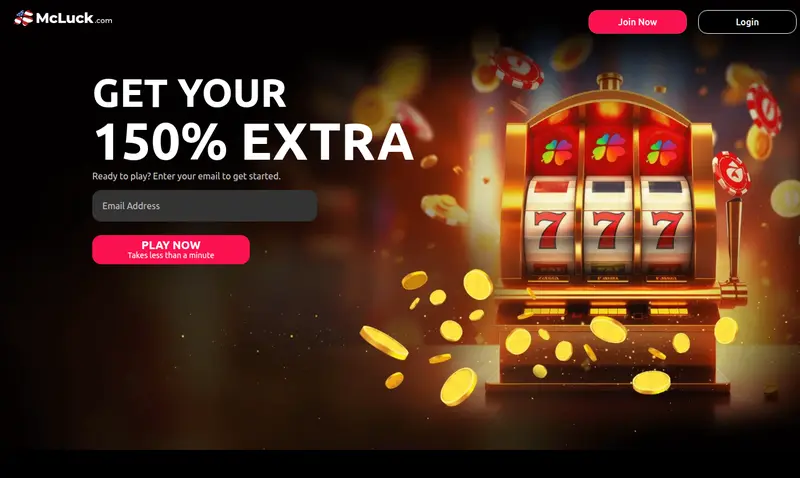
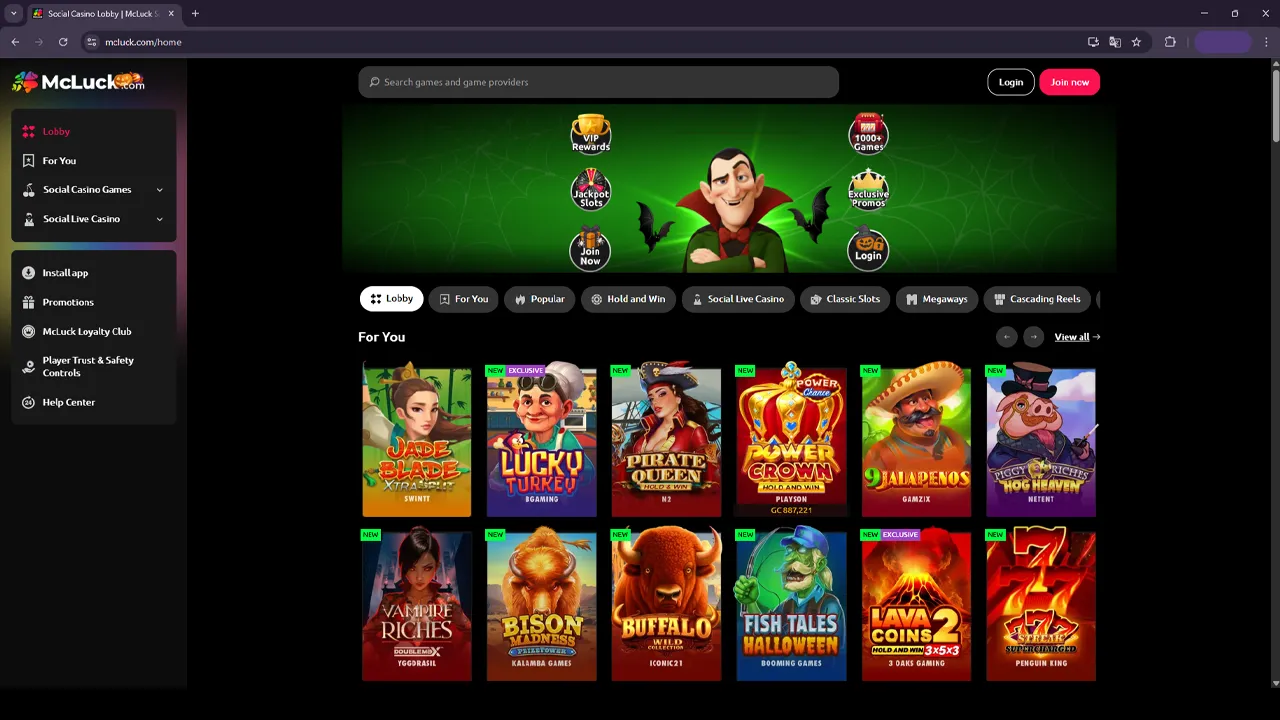
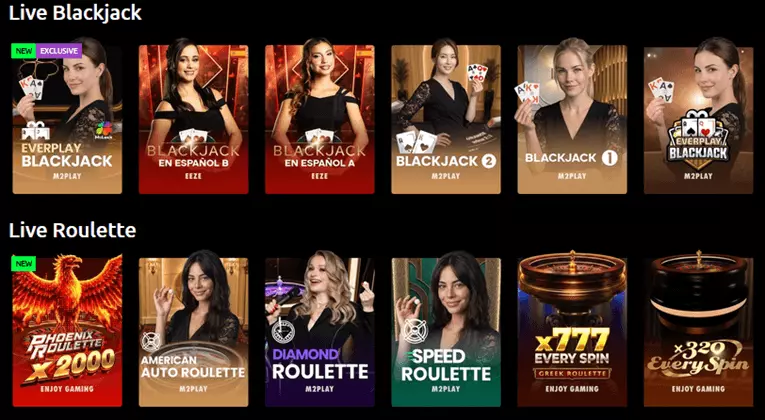
Screenshots of the McLuck interface, without balances or account details.

How the model works
Dual currency (Gold Coins + Sweeps Coins). Gold Coins are bought and have no prize value; the sweepstakes currency is granted free and is the only balance that can be redeemed.
That structure is why McLuck can operate without a gaming licence, and why a redemption is a contractual request rather than a regulated payout.
For McLuck's four numbers under Geo-block notice (2026-10-30), see how to read a terms page. For the verification step, see redemption and KYC.
Redemption rules
We have verified the state restrictions above but have not yet summarised this operator’s redemption clauses. Read the redemption and KYC guide before you buy anything, and check the terms on the operator’s own site.
What to check before you play
- Your state is not on the excluded list, and you are physically there when you play.
- The minimum redemption and the processing window in the current terms.
- Whether bonus sweepstakes currency carries play-through conditions.
- That your ID and payment details match your account name.
What McLuck is, and who runs it
McLuck is a US sweepstakes casino operated by B-Two Operations, the group behind Hello Millions and SpinBlitz. It offers casino-style games on a dual-currency model: Gold Coins that can be purchased but never redeemed, and Sweeps Coins that are granted free and are the only balance that can become a prize.
The brand is part of the second wave of sweepstakes operators, smaller than VGW's Chumba and LuckyLand, more available than Stake.us, and built around a simpler product than either. Its pitch is accessibility: a straightforward interface, a broad state footprint and a low entry point rather than a deep games catalogue.
That positioning matters when you evaluate it. McLuck is not trying to be the best sweepstakes casino in the country; it is trying to be an available one. Availability is a genuine advantage in a market where 22 states are closed to the most conservative operator, but it also means the brand competes on reach rather than on terms, and reach is not a consumer protection.
The B-Two group: three brands, one playbook
B-Two Operations runs McLuck, Hello Millions and SpinBlitz. The three brands share a model, a compliance posture and, in practice, a state map. When McLuck restricts a state, its siblings usually follow, because the decision is made at group level rather than brand level.
For a player, that has two consequences. First, the brands are not real alternatives: if McLuck excludes your state, the others probably do too. Second, switching between them does not diversify your risk, a group-level policy change can affect all three at once.
It also means the group's terms are the thing to read, not the individual brand page. A redemption clause that appears in McLuck's terms is likely mirrored in the sibling brands, and a support failure at one is a signal about the others.
The 17 excluded states, and what the list tells us
McLuck's geo-block notice excludes Washington, Idaho, Indiana, Nevada, Kentucky, Montana, Michigan, Louisiana, Delaware, New York, New Jersey, West Virginia, Maryland, Connecticut, Tennessee, Maine and Oklahoma. That is 17 states, and the composition is informative.
Eight of them, California is absent from this list, are covered by explicit 2025 to 2026 bans or by enforcement action in states such as Illinois. The rest reflect the group's own risk assessment: states where gambling law is broad enough that counsel advised against operating, or where a regulator has signalled interest.
The practical point is that the list is shorter than Stake.us's 22. McLuck accepts players in states the more conservative brand refuses, including some where the legal position is contested. That is a business decision, not a legal safe harbour, and it is the main reason to read the rest of this page before signing up.
| Category | States | What it means |
|---|---|---|
| Explicit bans | IN, NY, NJ, TN, LA, ME, OK | Statute-level; no operator can accept you |
| Enforcement risk | WV, MD, CT, DE | Regulator interest without a specific ban |
| Broad gambling law | WA, ID, NV, MT, MI, KY | Counsel-level risk assessment |
| Total | 17 states | Narrower than Stake.us, wider than VGW |
How the two-currency model works at McLuck
The structure is standard. You buy Gold Coins; the purchase comes with a free grant of Sweeps Coins. Gold Coins are spent on play and have no prize value. Sweeps Coins are what you use when you want a chance at a redeemable prize, and they are the only balance that can be converted.
Where brands differ is in how the grant is conditioned. Play-through, game contribution, expiry and redemption caps are all set by the operator, and they are the difference between a generous offer and a decorative one. We have not yet summarised McLuck's specific clauses, so this page tells you what to look for rather than what the numbers are.
That is a deliberate limitation. Publishing a play-through figure we have not read would be worse than publishing nothing, because it would look like verification and behave like marketing.
What we could verify, and what we could not
We verified the state restrictions directly from McLuck's own geo-block notice on 30 October 2026. That notice is public, specific and enforced at sign-up, which makes it a reliable source for eligibility.
We did not verify the redemption clauses, the play-through attached to specific promotions, the minimum redemption, the processing window or the KYC document set. Those live in the terms and in the cashier, and the terms were not retrievable in a form we could read and cite at the time of writing.
We are telling you this because the alternative, copying another site's summary, is how errors propagate in this category. When we have read the clauses, the page will say so, with the version and the date.
Redemption: what to check, in order
Until the clauses are summarised here, the responsible approach is to verify redemption yourself before you buy. The sequence below is the minimum.
First, find the minimum redemption and the maximum single request. A brand that allows small redemptions is easier to test; one with a high minimum forces you to build a balance before you can learn anything.
Second, find the processing window and whether it is measured in business days or calendar days. The difference is a week in practice.
Third, find the verification requirements and complete them before your first purchase. At most operators this means ID, proof of address and a payment method in your name.
Fourth, confirm that the state you are in is permitted for redemption, not just for sign-up. Some operators check location again at the cashier.
Fifth, request a small redemption and record the dates. That single data point is worth more than any review, including this one.
| Question | Why it matters | Where to find it |
|---|---|---|
| Minimum redemption | Decides how much you must build up | Cashier or terms |
| Maximum per request | Decides whether a large win can be paid at once | Terms |
| Processing window | Your cash-flow expectation | Terms |
| KYC documents | The most common delay | Help centre |
| State check at redemption | A surprise block after winning | Terms |
KYC at a brand we have not fully audited
Identity verification is the step where most redemption complaints originate, and it is broadly similar across sweepstakes operators because the underlying requirement is the same: prove you are who you say you are, in a permitted state, using a payment method you own.
Expect a government ID, a recent proof of address and a selfie or liveness check. Expect the name on all three to match the account exactly. Expect a manual review if any document is expired, cropped or in a different name.
The way to reduce risk at a brand you have not tested is to verify early and deliberately: submit clean documents after your first purchase, ask support to confirm that verification is complete in writing, and keep copies. If support cannot confirm completion, assume it is not complete.
Bonuses: the questions that decide the value
Every sweepstakes brand advertises a welcome offer, and almost every welcome offer is worth less than the headline. The questions below separate a real offer from a decorative one.
What is the play-through on the granted Sweeps Coins, and do table games contribute? Is there a maximum redemption attached to the bonus? Does the grant expire, and if so, from when, issuance or first play? Is the grant redeemable at all, or is it excluded from redemption by classification?
If a brand cannot answer those four questions on a public page, the offer is not designed to be understood. That is not automatically disqualifying, but it should lower how much you are willing to leave on the platform.
- Play-through multiplier and game contribution.
- Maximum redemption attached to the bonus.
- Expiry window and what starts the clock.
- Whether the grant is redeemable or excluded by classification.
- Whether the offer stacks with other promotions.
Games and product shape
McLuck's catalogue is built around slots, with a smaller table-game selection and no meaningful live-dealer depth. That is a product choice, not a flaw: most sweepstakes players play slots, and a focused catalogue is cheaper to maintain than a live studio.
For a player, the relevant question is whether the games you actually play are present and whether the providers are named. Named third-party providers usually mean the same certified builds used at licensed operators. In-house games offer less external assurance, which is worth knowing before you stake a large balance on them.
We have not audited the catalogue game by game. If slot variety is the reason you choose a brand, compare the lobbies directly rather than trusting a count.
Account, security and support
A sweepstakes account holds a balance that can be redeemed, which makes it a target. Use a unique password, enable two-factor authentication where offered, and check active sessions after any suspicious login.
Support is the only dispute channel before consumer protection becomes relevant. At a brand of McLuck's size, expect chat and email, with response quality varying by shift. The way to get a useful answer is to ask a specific question with a date attached, and to keep the transcript.
If a redemption is refused, ask which clause applies and request the calculation in writing. A refusal without a clause is a signal about how the operator handles disputes, and it is worth more than any ranking.
McLuck compared with Stake.us
The comparison is really about reach versus documentation. McLuck is available in more states, 17 excluded against 22, and that is decisive if your state is one of the five where the two differ.
Stake.us publishes more about its mechanics: the play-through on bonus cash, the one-request-per-day rule, the rail restriction while a balance remains. McLuck's terms exist, but we have not been able to summarise them, and that asymmetry is itself information: a brand that documents its constraints is easier to hold to them.
On product, Stake.us has the stronger catalogue and the more distinctive originals. McLuck is simpler, which some players prefer and which makes it easier to test with a small balance.
| Dimension | McLuck | Stake.us |
|---|---|---|
| Excluded states | 17 | 22 |
| Documented redemption rules | Not yet summarised by us | Published and specific |
| Catalogue | Slots-focused | Originals plus broad slots |
| Best reason to choose | Availability in your state | Product depth and explicit terms |
McLuck compared with Chumba and LuckyLand
VGW's brands are the incumbents: longer history, larger recognition and, in several states, the only sweepstakes option players have heard of. They are also the subject of the Kentucky litigation, which is the clearest example of enforcement risk in the category.
McLuck is smaller and newer, with a simpler product and, in our sample, a narrower set of states than the VGW brands historically offered. The trade is recognition for agility: a smaller operator can change terms and states faster, which cuts both ways.
If brand history matters to you, VGW wins. If availability and a simple product matter more, McLuck is the more likely fit. Neither is a safety judgment, no sweepstakes brand has a regulator behind it.
Who McLuck suits, and who it does not
McLuck suits a player in one of its 17 permitted states who wants a straightforward slots product, plans to keep a small balance, and is willing to verify early and test a redemption before building one. It also suits a player who has been excluded by Stake.us and wants a legitimate alternative in the same state.
It does not suit a player who needs documented redemption terms before signing up, who wants live dealer tables, or who intends to leave a large balance on the platform. Those are not moral judgments; they are mismatches between what the brand documents and what the player needs.
And it does not suit anyone in the 17 excluded states. There is no legitimate workaround, and a VPN converts an eligibility problem into a voided balance. If you are in one of those states, the useful question is not how to get in but which brand does accept you, and whether that brand documents its terms well enough to trust with a balance.
Red flags specific to this brand and group
The first is documentation. A brand that cannot be evaluated on its redemption terms should be tested with small amounts, not trusted with large ones. That applies to McLuck today, and it will stop applying when the clauses are summarised here.
The second is group concentration. McLuck, Hello Millions and SpinBlitz share an operator, a compliance posture and probably a state map. Spreading a balance across the three does not spread risk.
The third is the gap between the geo-block list and the legal map. McLuck accepts players in states where enforcement is active. That is within its rights, but it means a state exit can arrive with little notice, and a balance can be caught mid-redemption.
How to compare brands when nobody regulates them
In a licensed market you can compare operators on licence status, published RTP and regulator complaints. In sweepstakes, none of those exist. Comparison has to be built from different evidence, and the evidence is mostly textual.
The first axis is documentation. Does the brand publish the play-through, the cap, the minimum redemption and the processing window in a place you can read before signing up? A brand that does is easier to hold to its word, even if the numbers are unfavourable.
The second axis is state discipline. A brand that enforces its exclusions is a brand that takes compliance seriously, which usually correlates with cleaner redemption handling. A brand that lets you sign up first and fails you later is telling you something about its priorities.
The third axis is response quality. Ask a pre-sale question with a specific detail and see whether the answer addresses it. Template replies to specific questions are a preview of how a redemption dispute will be handled.
The fourth axis is balance behaviour. If a brand makes it hard to see which part of your balance is redeemable, assume the worst and test small. Transparency about balances is the cheapest form of honesty available.
| Axis | Good sign | Warning sign |
|---|---|---|
| Documentation | Terms state the numbers | Numbers only in support replies |
| State discipline | Exclusions enforced at sign-up | Sign-up allowed, redemption blocked |
| Response quality | Specific answer to a specific question | Template reply |
| Balance clarity | Redeemable vs bonus shown separately | One number, no breakdown |
What a state exit looks like, and how to prepare
State exits are the defining event of this market. A brand announces that it will stop accepting players from a state on a date, usually with a redemption window for existing balances. The window is the only thing that matters.
The pattern is consistent: an email, a banner, a date, and a deadline for requesting redemption. Players who act immediately usually get paid. Players who keep playing, or who wait to build a balance, are the ones who lose value when the window closes.
Preparation is simple. Keep balances small enough that a forced redemption is not a financial event. Check the terms for what happens on exit. Keep your verification current, because an unverified account cannot redeem quickly under deadline pressure.
At McLuck, where the group operates three brands, an exit is likely to affect all three at once. That is another reason not to spread a balance across the siblings.
Payment mechanics at a group-run brand
Sweepstakes brands usually support a narrower set of payment rails than licensed casinos, because the banking relationships are harder to establish and the regulatory status is less certain. Expect card or bank transfer for purchases, and a reduced set for redemptions.
The practical constraints are the same everywhere: the payment method must be in your name, the receiving account must match, and some operators require the redemption to go back to the method used for purchase. A mismatch is a standard reason for a hold.
Timing has three layers (internal pending, operator processing and rail settlement) and a published window usually covers only the middle one. Ask support which layer the window describes, and record the answer.
Fees are rarely charged by the operator but can appear at the bank or in crypto network costs. For small redemptions, the fee can consume a meaningful share of the amount, which is worth checking before you choose a method.
Taxes and records for sweepstakes prizes
Prize winnings can be taxable, and the reporting threshold depends on value and jurisdiction. Operators may issue a form above a threshold, but the absence of a form does not mean the prize is not reportable.
Keep a simple log: date, operator, amount requested, amount received, method. That log serves two purposes. It supports your tax position, and it is the evidence you need if a redemption is disputed.
This is general information, not tax advice. If the amounts are material, ask a professional who knows your state, because the treatment of sweepstakes prizes is not identical to the treatment of licensed gambling winnings.
Myths about smaller operators
The first myth is that a smaller brand is riskier by definition. Size matters for longevity, but it does not determine whether a redemption is handled well. A small operator with clear terms can be easier to deal with than a large one with opaque ones.
The second myth is that a brand with more states is more legitimate. A wider footprint can simply mean a higher risk appetite, which is exactly what you should be evaluating rather than celebrating.
The third myth is that a group with several brands is safer because it is diversified. Group brands share compliance, support and state decisions, so a failure at one tends to appear at all of them.
The fourth myth is that a licence exists somewhere behind the brand. In this category it does not. The absence of a regulator is the defining feature, and every comparison should start from that fact. A brand can be well run and still have no regulator; the two claims are independent, and conflating them is how players end up trusting the wrong thing.
A support escalation template that works
Most players write to support in frustration, which produces a template reply. A short, factual message produces a better answer because it gives the agent something specific to resolve.
State the account email, the redemption request date and amount, the verification status, and the exact question. Ask for the clause that applies and for a completion date. Keep it to five lines, and keep the reply.
If the first answer is a template, reply with a narrower question. If the second is also a template, escalate in writing to the published complaints address and open a consumer protection complaint in parallel. Neither will produce a fast payment, but both create a record.
- Account email and request date.
- Amount and method requested.
- Verification status at the time of request.
- The specific clause or the specific blocker.
- A requested completion date.
Where McLuck sits in the market
The US sweepstakes market has three layers. At the top are VGW's brands, with the longest history and the widest recognition. In the middle are the scaled challengers, Stake.us on the conservative side, McLuck and its group on the availability side. At the bottom is a long tail of small brands competing on bonuses and speed.
McLuck's position is deliberate: it is the available middle. It accepts players in states the conservative brand refuses, and it does so with a simpler product than the market leaders. That gives it a real audience, players in states like Texas or Florida who want a functional slots product and are not served by the most restrictive operators.
The risk of that position is that availability is easy to copy. Any challenger can accept the same states, and several do. What is harder to copy is documentation and trust, which is exactly where McLuck currently has the least evidence on this site.
That is the honest summary: a competent, available product with a state map we have verified and redemption terms we have not. Whether that is enough depends on how much you value a documented process over a broader footprint. If your state is open at McLuck and closed at Stake.us, the choice is made for you; if both are open, the documented brand is the safer default until McLuck publishes terms we can verify.
If McLuck leaves your state
State exits are not hypothetical in this market; they happened repeatedly in 2025 and 2026. When they occur, the operator typically announces a date, stops new sign-ups, and gives existing players a window to redeem.
The window is the only thing that matters. Act on the announcement the day you receive it: request redemption, confirm verification is complete, and accept a smaller amount if a cap or minimum forces the choice. Waiting to build a balance is the single most common way players lose value in an exit.
If the window closes with a balance remaining, the terms decide what happens. Some operators allow a late request on proof; others reserve the right to void. That clause is worth finding before you need it, which is why the fifteen-minute review matters.
For a group brand, assume the exit applies to all siblings. Do not move a balance from McLuck to Hello Millions in the hope of keeping access; the compliance decision is made above the brand.
Clauses players misread most often
The first is the difference between a purchase and a grant. A purchase buys Gold Coins; the Sweeps Coins that come with it are a promotion, and promotions carry conditions. Reading a bundle as a straightforward currency purchase is the root of most redemption disappointments.
The second is the meaning of a balance. A single number on screen can represent redeemable cash, bonus cash mid-play-through and expired promotional value. The terms see three balances; the interface shows one. Ask support for a breakdown before a large request.
The third is the pending period. It is not the same as the processing window, and it is not a queue position. A request can sit pending while verification is resolved, then restart the clock when it is approved.
The fourth is the state clause. Eligibility is checked at sign-up and may be checked again at redemption. Moving states mid-balance is the kind of detail that only matters once, and then it matters a lot.
A short glossary for McLuck players
Sweepstakes terms use a vocabulary that looks like gambling jargon but is not identical. These are the terms that decide most outcomes at McLuck and its siblings.
Gold Coins are the purchasable currency with no prize value. Sweeps Coins are the free promotional currency that can be redeemed. Play-through is the amount you must wager before a grant becomes redeemable. A cap is the maximum that can be redeemed from a bonus, regardless of its size.
KYC is identity verification. A pending period is the internal hold before processing. A geo-block is the operator-enforced state restriction. An AMOE is the free postal entry that keeps the model a sweepstakes.
The glossary matters because disputes are usually about definitions, not facts. When support says a balance is not redeemable, it is applying one of these categories. Knowing which category applies is the difference between a productive question and a circular argument.
A useful habit is to write the definition next to the balance before you request a redemption: how much is redeemable cash, how much is mid-play-through, and how much expires. If the interface will not separate them, support should, and the answer belongs in your records.
Definitions also move. An operator can reclassify promotional value between versions of its terms, and the version that applies is usually the one in force when the balance was granted, not when it is redeemed. That detail is buried in the change-of-terms clause and it is worth knowing if you hold a balance across an update.
None of this is unique to McLuck. It is the vocabulary of the category, and every brand benefits from players who do not know it. Learning five definitions is the cheapest protection available, and it costs nothing but ten minutes.
Our test protocol for a brand we have not fully audited
We do not publish a payout time for McLuck because we have not observed one. What we can publish is the protocol a reader can run in an afternoon.
Read the terms and note the version and date. Confirm your state is permitted. Complete verification before purchasing. Buy the smallest bundle. Play briefly. Request a small redemption and record request and receipt dates. If anything stalls, ask for the clause and keep the reply.
That protocol produces a data point no review can substitute for, because it reflects your account, your state and your documents. It is also how we will build the redemption log that eventually replaces this section.
Reviewed by Darnell Simons
Darnell Simons tested casinos and sportsbooks as a player long before he wrote about them, and now covers sweepstakes and social casinos the same way: open an account, read the terms, test a small redemption, and write down what actually happened.
McLuck: common questions
Is McLuck available in my state?
Check the excluded list above. McLuck's terms exclude 17 states, and those exclusions are enforced at sign-up. If your state is on the list, the operator will not accept you; using a VPN to bypass it breaches the terms and can void a redemption.
How does McLuck redemption work?
We have not yet summarised McLuck's redemption clauses. They are governed by the operator's terms, not by a regulator; read them before purchasing, and check the minimum redemption and processing window.
Is McLuck a licensed casino?
No. McLuck operates as a sweepstakes promotion with virtual currencies and a free entry route. It is not a licensed gambling operator, and no state gaming regulator stands behind a redemption.
Can I play McLuck for free?
At McLuck, yes. The free route sits in Geo-block notice (2026-10-30): it requires an alternative method of entry, usually a free postal request, so no purchase is necessary. Purchases buy Gold Coins, which have no prize value.
Is McLuck legal in my state?
Only if your state is not on its 17-state exclusion list and you are physically there when you play. The list is enforced at sign-up and again at redemption, and it can change without notice.
Does McLuck have a gaming licence?
No. It operates as a sweepstakes promotion, not a licensed casino. There is no state gaming regulator supervising its redemptions.
How long does McLuck take to pay?
We have not observed a redemption, so we do not publish a number. Ask support for the current processing window in writing, and test with a small amount before building a balance.
Is McLuck the same as Hello Millions and SpinBlitz?
They share the same operator group and, in practice, the same compliance posture and state map. Switching between them does not diversify your risk.
Why is McLuck available in states where Stake.us is not?
The brands make different risk decisions. McLuck accepts a wider map, including some states where enforcement is active. Availability is a business choice, not a legal safe harbour.
Can I use a VPN to play McLuck from an excluded state?
No. Geolocation is part of the operator's compliance, VPN use breaches the terms, and redemption requires a location check.
Back to state availability and redemption and KYC.