What Virginia allows
Virginia has authorised casinos in a handful of cities, Bristol, Danville, Portsmouth, Norfolk and Petersburg, and licenses online sports betting through the state lottery. It does not license online casino games, so slots and tables at home are not available through a regulated product.
Sweepstakes sit outside that framework. They are not licensed by the lottery, not covered by the casino authorisations and not banned. The model rests on the same promotional structure as elsewhere: gold coins purchased, sweeps coins granted free, prizes awarded through a sweepstakes.
The difference here is that Virginia has a functioning regulated gambling market to compare against. That does not make the sweepstakes product safer or riskier in itself; it makes the trade-off visible, which is useful for a reader trying to decide what to use.
Who regulates gambling in Virginia
The Virginia Lottery is the state's gambling regulator, which is a sentence that surprises readers who expect a casino commission. The lottery licenses mobile sports betting, administers the casino authorisations the legislature granted to five cities, and runs the state's lottery. There is no separate gaming board, and there is no online casino licence.
That structure is recent. Mobile sports betting launched in January 2021 under a law that let the lottery license operators directly, without a land-based partner, which is why Virginia's sportsbook field is broader than its casino market. The casino authorisations came the year before and are tied to local referendums in named cities, which is why the state has approved a handful of properties rather than a statewide industry.
A dual-currency sweepstakes product is outside every part of that remit. It is not a sports bet, not a lottery product and not casino gaming at an authorised property. The lottery has no application for it and no authority to write one, which means the product operates in a gap the state has not filled rather than in a market it has chosen to leave open.
Virginia's skill-games history explains why the gap has not been filled. The state spent years arguing about what a skill machine was and whether a truck-stop game counted as gambling, and the answer moved more than once. A legislature that has been through that argument is careful about definitions, and the absence of a sweepstakes statute suggests it has not found one it likes.
What the lottery can verify is narrow and useful. It publishes the sportsbooks it has authorised, the terms those operators accepted and the complaint process a player can use, and it can act against a licence. It cannot verify a sweepstakes brand, because the brand holds no lottery licence; a reader who calls the lottery about a redemption will be told, correctly, that the product is outside its remit.
Market history: from skill games to casinos
Virginia's modern gambling era began with the lottery, expanded through historical horse racing machines and sports betting, and arrived at casinos last. The legislation that authorised the casinos was a local-economic-development bill as much as a gambling bill: each project was tied to a city that had lost an industry, and each needed a local referendum before it could proceed.
The five cities tell that story. Bristol, Danville, Portsmouth, Norfolk and Petersburg are the projects in the current list, and the practical line-up has been adjusted since the authorising statute as local votes passed or failed. Local consent is a live variable in Virginia rather than a formality, which is why the casino map is a set of projects at different stages rather than a finished market.
Skill games ran alongside that expansion as an unresolved category. The state banned them, a subsequent statute brought them back in a limited form, and the fight produced a body of argument about what counts as a gambling device. That experience is why Virginia approaches a promotional casino differently from a state with no gambling history at all: the vocabulary for the argument already exists.
Sports betting arrived in January 2021 with a direct licensing model, which is a rare design. Most states tie an online sportsbook to a casino or a racetrack; Virginia let the lottery license operators on their own, and the result is one of the broader sportsbook fields in the country and a regulator used to supervising accounts it does not share with a land-based partner.
For sweepstakes, the sequence matters less than the pattern. Virginia has expanded gambling when a bill attached it to a local project or a state revenue stream, and it has left the promotional product alone because no bill has attached it to anything. The open tier is the absence of a decision, in a state that has otherwise been comfortable making them.
What the regulated alternative actually offers
A licensed sportsbook gives you a regulator, published rules, a complaint route and, in most cases, segregated funds. It does not give you slots. A casino in Bristol gives you slots in person, with a licence and a physical address, but not at home.
So the choice in Virginia is not "regulated versus unregulated casino", it is "regulated sportsbook", "in-person casino", or "sweepstakes product for casino-style games at home". Each answers a different need, and only one of them has no regulator.
Which operators accept Virginia
Both audited brands list Virginia as available. That makes the state one of the overlap markets where the conservative and permissive ends of the market agree, so the choice is about documentation and product rather than eligibility.
With two verified options, a brand-level change removes half the market. Check the operator's list before you sign up, not after you win.
What to check before you play
- The operator's own Virginia wording: excluded, restricted, or open.
- Whether redemption is available in Virginia, not just play.
- The redemption minimum, window and methods.
- Play-through and cap on the welcome offer.
- The operator's minimum age, which may differ from the sportsbook's 21+.
Redemption and taxes
Virginia has no regulator for this product, so redemption follows the operator's terms: verification, a minimum, a pending period and processing. The state enters at the eligibility check, which is why a brand that accepts Virginia at sign-up can still refuse a player whose circumstances change.
Virginia has a state income tax, so a prize may be reportable at the state level as well as federally. Keep a record of dates and amounts, and ask a professional if the amounts are material. This is general information, not tax advice.
Why Virginia is a watch state
Virginia has been active on gambling policy, casinos, sports betting, and the long fight over skill games. A state that has already litigated what counts as gambling is more likely to legislate on a new product than one that has never had the argument.
For a player, that means the same discipline as everywhere: small balances, current verification, early redemption, and a check of the operator's list before every session. In Virginia, that discipline is what the restricted tier leaves you with.
How Virginia's casino authorisations work
Virginia does not license casinos generally. It authorised them city by city, through local referenda in Bristol, Danville, Portsmouth, Norfolk and Petersburg. Each project is tied to a specific developer and a specific location, and each has its own timeline.
That structure matters for a sweepstakes player because it means the state's casino framework is not a general online regime. A licence in Danville is a licence for a building, not a platform. No Virginia casino licence permits online slots, and none of them creates a regulator for a promotional product.
The same is true of sports betting: the lottery licenses online sportsbooks, and that licence covers sports wagering only. It does not extend to casino games, and it does not create authority over sweepstakes.
Why the overlap matters
Virginia is one of the few states in this series where a player has a genuine regulated option and a sweepstakes option at the same time: a licensed sportsbook for sports, an in-person casino for slots, and a sweepstakes product for casino-style games at home.
That makes the trade-off legible. The sportsbook has a regulator and a complaint route; the casino has a licence and an address; the sweepstakes product has terms. A player who understands the three can decide what they are buying rather than assuming all gambling products are equivalent.
It also makes the sweepstakes product's weakness obvious. If a redemption stalls, there is no Virginia authority to call, the lottery regulates sports betting, not this.
Redemption scenarios in Virginia
The smooth case. Verification on day one, small purchase, play-through cleared, small redemption requested. Approval within the stated window, bank posts a few days later.
The verification loop. A document is rejected, then another is requested. The cause is usually a mismatch, middle name, old address, payment method in someone else's name. Ask which requirement failed, in writing, and resubmit clean documents. In Virginia, the verification loop is the step the operator's terms control, not a regulator.
The state change. A brand announces it will stop accepting Virginia players in 30 days. Redeem immediately, accept a smaller amount if a minimum forces it, and do not try to "play up" the balance.
What would change this page
Either brand changing its Virginia status, a bill or lottery rule that mentions promotional play, or an observed redemption from a Virginia account. Any of those would rewrite the page and change the date.
The skill-games fight, and what it signals
Virginia spent years arguing about "skill games", slots-like machines placed in convenience stores and truck stops. The dispute involved legislation, court challenges and a series of regulatory reversals, and it established something important: the state is willing to litigate what counts as gambling rather than leave the question to interpretation.
That history matters for sweepstakes. A legislature that has already fought over whether a machine is a gambling device is more likely to examine a product that offers casino-style games for prizes. It does not mean a ban is coming; it means the argument has precedent.
For a player, the practical signal is that Virginia is an "active" state rather than a passive one. Active states change rules, and rule changes are what move operator lists.
How Virginia players find brands
National marketing, affiliate sites and word of mouth. The first tells you the product exists, not whether it accepts Virginia. The second often ranks by commission rather than eligibility. The third is accurate about experience and unreliable about terms.
The reliable source is the operator's own document, read on the day you intend to use it. In a state with an active regulator, that habit matters more, because the list is more likely to move.
Taxes and records
Virginia taxes personal income, so a prize can be reportable at the state level as well as federally. There is no sweepstakes-specific rule we have verified, so general income rules apply and your records carry the weight.
Keep date, operator, amount and method. If the amounts are material, ask a professional who knows Virginia. This is general information, not tax advice.
A Virginia 30-day plan
Week one: confirm Virginia is permitted, read the redemption section, verify with an ID and a recent address document, and ask for written confirmation. Week two: buy the smallest bundle, play briefly, request a small redemption, and record the result.
Weeks three and four: decide deliberately whether to keep a balance at all. In a state with a regulated alternative for sports but not for casino games, the sweepstakes product is the only online option, which is a reason to keep the balance small, not a reason to relax.
What the regulated alternative does not solve
A Virginia sportsbook licence does not give you casino games, and a Bristol casino does not give you play at home. The regulated market solves the sports need and the in-person need; it does not solve the "slots at home" need, which is the gap a sweepstakes product fills.
That is why the comparison is not a simple "regulated good, unregulated bad". It is a comparison of what each product offers, and the sweepstakes product is the only one that offers online casino-style play in Virginia, with the protection level that implies.
Red flags specific to Virginia brands
- Virginia mentioned in marketing but absent from the terms.
- Language implying lottery or casino-commission supervision of sweepstakes payouts.
- A state list without a date or version.
- Different redemption terms on the marketing page and the terms page.
- Support describing Virginia as "fine" without citing the clause.
The first ten minutes
Open the terms, search for Virginia, and note whether it appears in an excluded list, a permitted list, or not at all. Then find the redemption section and read the minimum, the window and the verification requirements. Then check the date on the page.
If any of those is missing, stop. Ten minutes of reading prevents the only failure that costs money: building a balance you cannot withdraw.
Common mistakes in Virginia
- Assuming a sportsbook account tells you anything about sweepstakes availability.
- Buying before verification, then hitting a document mismatch at redemption.
- Using a payment method in someone else's name.
- Assuming a casino licence in another city covers online play.
- Leaving a large balance because the state "looks regulated".
Comparing the two branded options
Stake.us publishes the mechanics that decide a redemption, play-through on bonus cash, the one-request-per-day rule, the rail restriction while a balance remains, and has the broader catalogue. McLuck publishes a specific state list but less about redemption, and its product is slots-focused.
For a Virginia player, the trade is documentation against simplicity. Choose the documented brand if predictability matters; choose the simpler one if you value a narrower product and will test with a small balance. Holding both is not diversification.
What a restriction would look like in Virginia
Virginia has an active regulator and a recent history of litigating gambling questions, so a restriction would most likely arrive through legislation or a lottery rule rather than a brand decision alone.
The practical preparation is the same as everywhere: small balance, current verification, early redemption, and a check of the operator's list before every session.
Extended questions from Virginia readers
Is the lottery a sweepstakes? No. It is a state-run game with published odds and a regulator; a sweepstakes is a private promotion with operator terms.
Can I use a casino app in Virginia? Only if a licensed operator offers one, and that is a different product with a different regulator. It is not a sweepstakes alternative.
Why does the state regulate sports but not casino games online? Because the legislature authorised sports betting and casino projects separately. The two frameworks do not overlap.
Are prizes taxable? Virginia has a state income tax, and federal treatment can apply. Keep records; this is not tax advice.
Why we do not publish payout times
Because we have not observed one in Virginia. A published window is the operator's claim, not our measurement, and a ranking built on claims is marketing with a table around it. When we have observed a redemption, it will appear with the date, method and amount.
How we test a state we cannot visit
We cannot be physically present in every state, and location checks are part of the product. So we test what can be tested remotely: the published state list, the sign-up eligibility wording, the redemption section, and support answers to specific questions. Where an observation requires a local account, we say so rather than implying we made one.
What a player gains and gives up
The gain is access to slots and tables online, which Virginia does not license. The give-up is protection: no regulator for this product, no segregated funds, no statutory deadline for a redemption. The trade is only rational if the balance stays small.
The other give-up is certainty. In a licensed sportsbook the rules are published and enforced; here the operator's terms are the rules, and they can change.
Three rules that survive a change
Keep the balance small enough that a forced redemption is not a financial event. Verify before you buy, because an unverified account cannot redeem quickly under deadline pressure. Record dates, because a log is the only evidence when a request stalls.
A support template that works
State the account email, the request date, the amount, the verification status, and one specific question. Ask for the clause that applies and a completion date. Keep it to five lines, and keep the reply. If the answer is a template, narrow the question; if the second answer is also a template, escalate in writing.
Where Virginia fits the series
This is the seventh hub. The series covers no regulator (Texas), an online remit (Ohio), a single-tribe compact (Florida), many compacts (Arizona), no casino market (Georgia), a fresh sports regulator (North Carolina), and now a state with both casinos and sports betting licensed but no online casino.
Virginia's distinguishing feature is that the regulated alternative is visible. That makes the trade-off legible in a way it is not in Texas or Georgia, where there is nothing to compare against.
What Virginia has said, and not said
Virginia has not legislated on sweepstakes, and no state agency has issued a public position that we have verified. The silence is the legal basis for the product, and silence is the weakest form of permission.
Unlike Arizona, Virginia has a regulator with an online remit and a recent history of litigating gambling questions. That makes the silence more fragile: the capability to act exists, even if the intention has not been expressed.
How to read an operator's Virginia clause
Look for the state in three places: the excluded-territories list, the sign-up eligibility wording, and the redemption section. A brand can be silent in one and explicit in another, and the redemption section is the one that decides whether you can get money out. In Virginia, the restricted tier makes that three-place check decisive.
If Virginia appears only in marketing, treat it as unverified. If it appears in the terms with a date, treat it as current until the date suggests otherwise. If it appears nowhere, ask support in writing and keep the reply.
What we would update first
The brand table, if either operator changes its Virginia status. Then the legal section, if a bill or lottery rule appears. Then the redemption note, if we observe a Virginia redemption with a date and method.
A short glossary for Virginia readers
Authorised casino: a casino permitted for a specific city through a local referendum, not a general licence. Sports betting licence: a lottery-issued licence for sports wagering only. Sweepstakes: a promotion with a free entry route, governed by the operator's terms.
Play-through: the amount you must wager before a bonus becomes redeemable.Redemption: the conversion of Sweeps Coins into a prize. AMOE: the free postal entry that keeps the product a sweepstakes rather than gambling.
The glossary matters because disputes are usually about definitions, not facts. When support says a balance is not redeemable, it is applying one of these categories, and knowing which one is the difference between a productive question and a circular argument. For a Virginia reader, the definitions decide whether the restricted list applies at all.
What the next year could bring
No change is the most likely outcome, because the state is focused on its casino build-outs and its sportsbook market. A bill is the second possibility, and it would probably arrive as part of a broader gambling package rather than as a standalone measure.
A lottery rule is the third, and it would be faster than legislation, the same mechanism that moved Illinois. In every scenario the player's preparation is the same: small balance, current verification, early redemption, dated record.
The questions we cannot answer
How long a redemption takes in Virginia, and whether either brand enforces the state list at redemption as well as sign-up. We have not observed either. What we can say is what the documents say, with dates.
We also cannot say whether a future bill would restrict the product or absorb it into a licensing framework. That is a political question, and the answer will depend on who drafts it.
Why the regulated comparison helps
Because it gives the reader a benchmark. A licensed sportsbook publishes its timelines and answers to a regulator; a sweepstakes product publishes terms and answers to support. Seeing both in the same state makes the difference concrete rather than abstract.
It also prevents a common mistake: assuming that because a state "has gambling", everything in it is regulated. Virginia has gambling and does not regulate this product, and the gap between those two facts is where a player's balance sits.
Closing
Virginia is the clearest market in the series for understanding what a licence buys. The sportsbook has a regulator and a complaint route; the casino has an address; the sweepstakes product has terms. Only one of those three gives you someone to call.
If you play here, treat that as the price of access. Read the clause, test small, and keep the receipt, the page will tell you what was true when it was checked, and only your own test tells you what is true for your account. That is the same sentence that ends every hub in this series, because it is the only advice that survives a change in the market.
A note on the casino build-outs
Virginia's casinos are projects rather than a mature market. Some are operating, some are under construction, and each has its own local politics. That means the "regulated alternative" is not uniform across the state: a player in Bristol has a different set of options from a player in Richmond.
Sweepstakes availability does not vary by city, because it is set by operator terms and state law. But the local market does, and that shapes what "the only option" means for a given reader.
What this hub is shorter on
Virginia has less public regulatory activity around sweepstakes than Ohio or North Carolina, so there is less to cite on enforcement. What it has more of is a regulated market to compare against, which is why the comparison sections are longer than the enforcement sections.
How to correct this page
If an operator changes its Virginia status, or a bill or lottery rule appears, write to us with the URL and the date. We check, correct, and record the change. A correction is worth more than a new essay, and it is the fastest way to keep a page about a moving market honest.
Why the series stops at seven
Seven hubs cover the seven shapes a market can take: no regulator, an online remit, one compact, many compacts, no casino market, a fresh sports regulator, and a licensed market without online casino. Every other open state is a variation on one of those.
The series is not a map and not a ranking. It is a method applied seven times, so a reader in an uncovered state can still use it: check the operator's list, read the redemption clause, test small, and keep a log. The method is the product; the seven hubs are worked examples of it.
What to do with two hubs
If you live near a border, read both pages. The legal analysis differs, the brand lists differ, and the practical answer may be that the neighbouring state has an option yours does not, or the reverse. The rule follows your physical location, not your address.
That is the last thing worth saying about Virginia: the state is open, the brands accept it, and the protection is contractual. Everything else on this page is detail in service of that sentence.
Skill games, sweepstakes and the difference
Virginia's skill-games dispute involved machines that looked like slots but were argued to require skill. Sweepstakes are a different structure: the game is chance-based, but the entry is free and the prize is awarded through a promotion. The legal question is not "is it skill?" but "is there consideration?".
That distinction is why a skill-games precedent does not automatically apply. It does, however, show that Virginia's courts and legislature are willing to examine the substance of a product rather than its label, which is the risk a sweepstakes operator is pricing when it decides whether to accept the state.
What a restriction here would mean for the series
Virginia is the only hub with a licensed market that a reader can compare against directly. If it restricted sweepstakes, it would become the first state in the series where the regulated alternative is also the only alternative, and the page would have to say that plainly.
That is why the series tracks both availability and alternatives. A state that is open but has no regulated option is a different market from one that is open and has three, and the page should say which one you are in. That is the question the rest of this page exists to answer, in practice as well as in theory.
Checklist before you sign up
- Virginia explicitly permitted by the operator, not merely absent from a ban list.
- Redemption, not just play, available in Virginia.
- Terms dated and current.
- Payment method in your name, ready for verification.
- Balance sized so a refusal is inconvenient, not damaging.
What the licensed market actually offers a Virginia reader
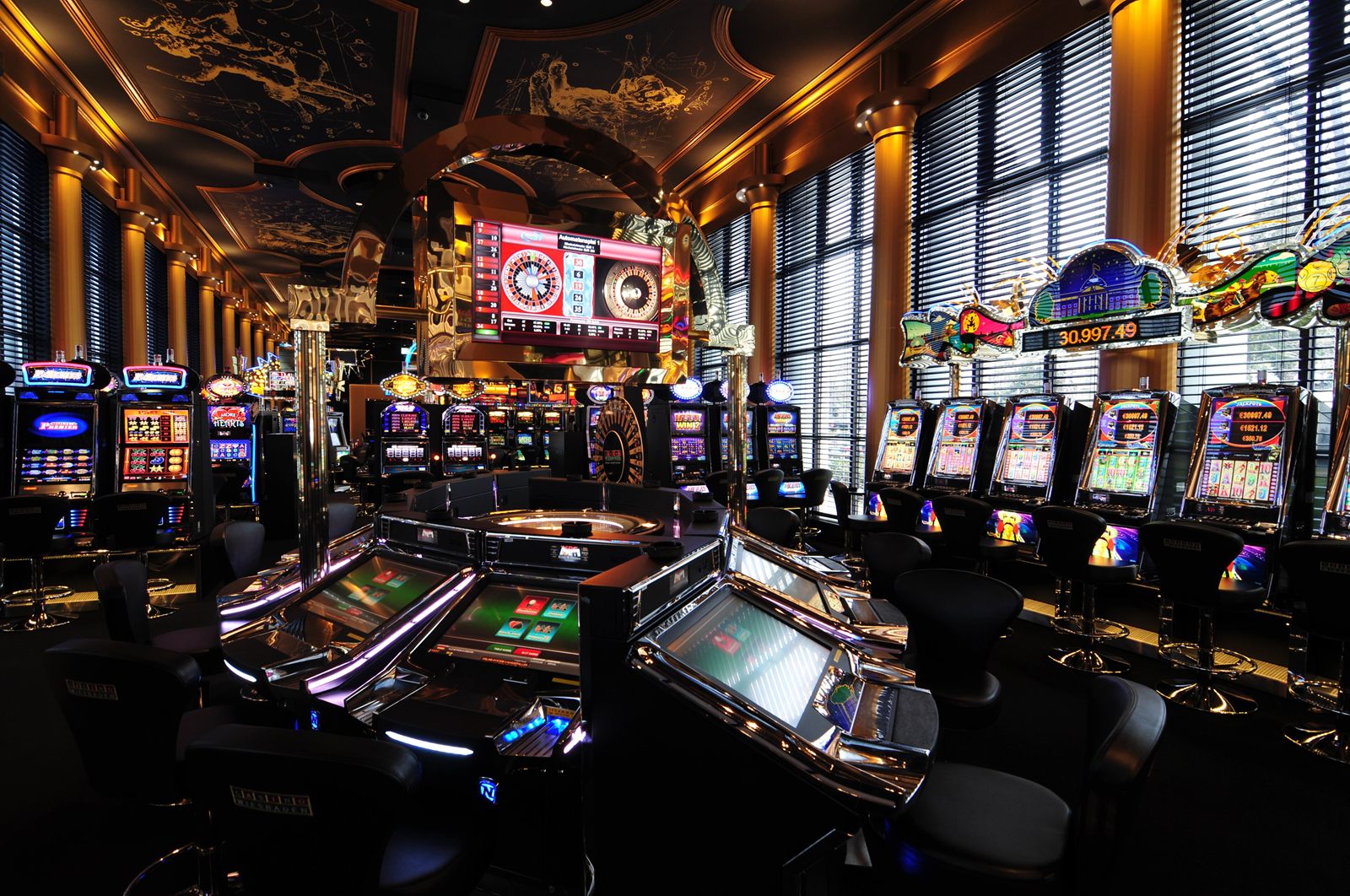
Virginia licenses sports betting, and it has authorised casinos in a handful of named cities subject to local referenda. It does not license an online casino. That combination means a reader has a regulated sportsbook, a physical casino if they live near one of the named cities, and nothing regulated for online casino games.
That gap is why the promotional product has a Virginia audience. A reader who wants slots on a phone has no licensed route, and the promotional market is the only online casino-style product in the state. The licensed alternative exists for sport and, in some places, for table games in person.
The second consequence is regulatory attention. A state that has built a licensing framework for one product tends to ask why another product is operating without one, and that question is the beginning of every restriction in this series. Virginia has not answered it yet, which is why the state is open.
Why the casinos-in-cities model matters here
The Virginia casino model is a local referendum rather than a statewide licence, and the difference matters for the promotional market. A city that approves a casino creates a physical alternative for its residents, which weakens the argument that the promotional product is the only option in the state.
A city that rejects one leaves its residents with the promotional product and a sportsbook, which is the same position as most of the state. The map is therefore uneven, and a reader's experience depends on a vote they may not have followed.
For a reader this is a reason to know the local position rather than the state headline. A casino twenty minutes away changes the comparison; a casino three hours away does not.
How Virginia compares with its neighbours
Maryland is the closest comparison and the most different. Maryland has six casinos, a broad licensed sportsbook and a promotional market that most operators have left. Virginia has a sportsbook, casinos under construction and an open promotional market. Two states on one metro area with opposite answers.
North Carolina is the second. North Carolina has tribal casinos, a lottery and a licensed sportsbook, and its promotional market is open with a shorter brand list. Virginia has the same shape with a larger population and a more developed licensing framework.
West Virginia is the third and the most useful. West Virginia licenses an online casino as well as sports betting, which means a reader there has the regulated alternative that a Virginia reader does not. Two states in the same region with one product difference and a very different market.
Records a Virginia reader should keep
The four documents are the same as everywhere on this site: the terms version, the account date, the redemption request and the support replies. In Virginia they matter because the state has a licensing apparatus that could take an interest in the product, and a reader with a file is part of that record.
The second is the state list. A brand that lists Virginia today may not tomorrow, and the screenshot with a date is what proves the account was opened under a list that included the state.
The third is the payment trail, which proves money moved. The fourth is the correspondence with any licensed operator the reader also uses, because a comparison between a regulated product and a promotional one is the most useful thing a Virginia reader can build.
How this page was built
Sources are the operator terms we could read, the Virginia regulator's own pages, and the statute or enforcement action where one exists. The state list was checked on the date at the top of the page. We do not have a redemption record from Virginia, so the page does not claim a payout speed or a success rate.
Reviewed by Darnell Simons
Darnell Simons tested casinos and sportsbooks as a player long before he wrote about them, and now covers sweepstakes and social casinos the same way: open an account, read the terms, test a small redemption, and write down what actually happened.